
No Bad Questions About AI
Definition of AI guardrails
What are AI guardrails? How do they keep AI systems within defined boundaries
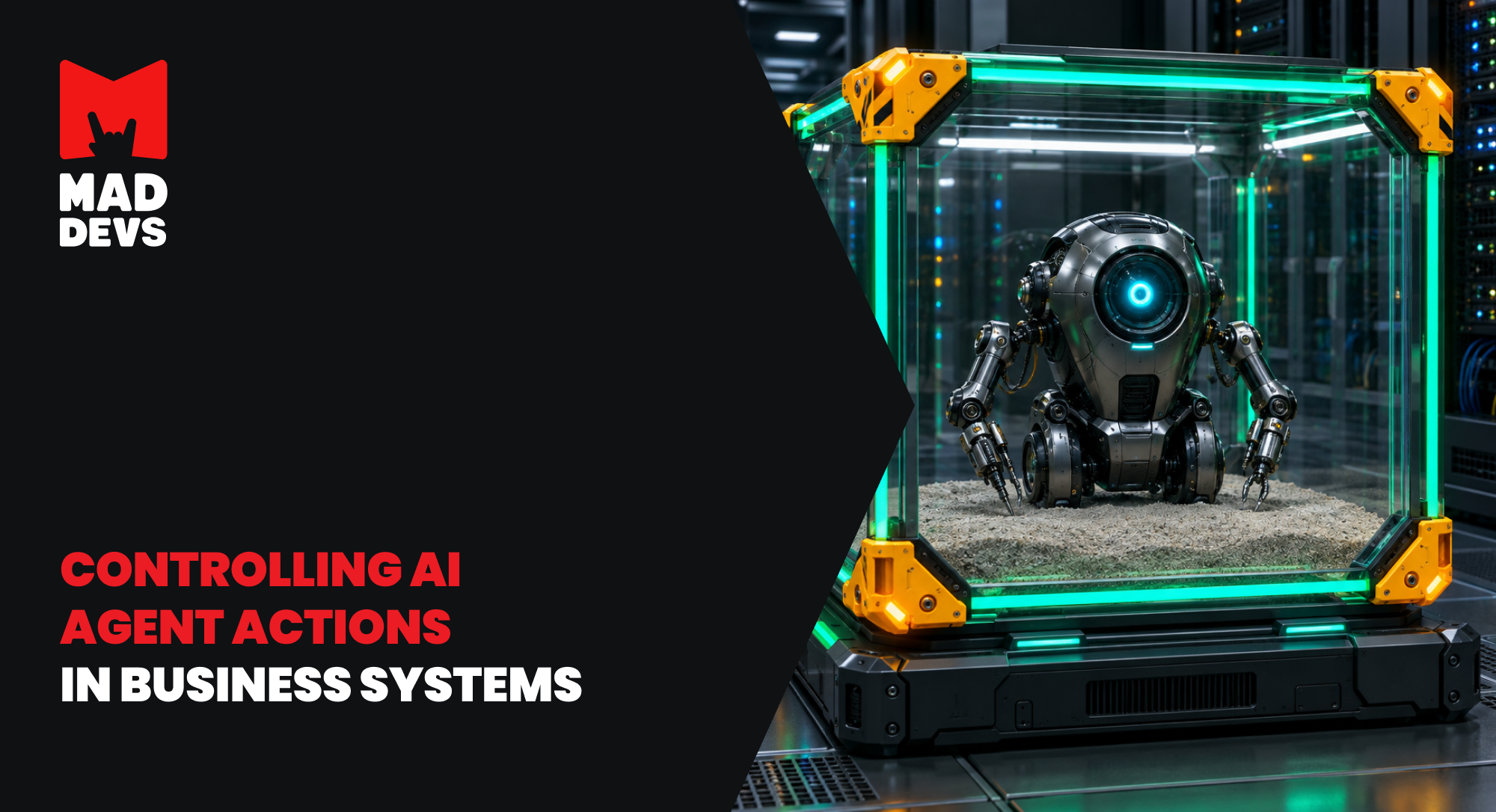
AI guardrails are policy, validation, and technical controls that keep an AI system operating within defined safety, security, business, and operational boundaries. They constrain what a system can accept, produce, access, or do instead of relying on the model to enforce every rule consistently by itself.
Guardrails can operate before a prompt reaches the model, after a response is generated, or when an AI agent attempts to access data, call a tool, or take an action. They reduce risk, but they do not guarantee correct or safe behavior in every situation.
What are AI guardrails?
AI guardrails are safeguards placed around AI behavior to enforce rules from product requirements, security policies, safety standards, or business constraints.
For an LLM application, a guardrail might block a prompt containing sensitive data, validate an answer before it reaches the user, or require a response to follow a defined schema. For an AI agent, the same idea extends beyond text: a guardrail may restrict which tools the agent can call, which records it can access, or which actions require human approval.
Guardrails are not limited to content filtering. Controls can sit at trust boundaries between users and models, models and data, or agents and external systems. Their role is to make acceptable behavior explicit and enforceable.
How do AI guardrails work?
AI guardrails can be applied at different stages of an AI system. A practical way to understand them is to look at input and context controls, output controls, and action or runtime controls.
Input and context controls
Input guardrails inspect what enters the AI system before or while the model processes it. They may detect prohibited prompts, sensitive information, suspicious instructions, or untrusted content retrieved from external sources.
For example, a RAG application may reject retrieved text that contains instructions intended to manipulate the model, while another system may redact personal data before it reaches the model.
Output controls
Output guardrails evaluate what the model produces before the result is shown to a user or passed to another system. They can check for prohibited content, sensitive-data leakage, malformed responses, required fields, or business-policy violations.
Some systems also apply grounding or validation checks to reduce the impact of unsupported claims. These controls can catch certain failures, but model- or classifier-based checks can still produce false positives and false negatives.
Action and runtime controls
For AI agents, guardrails may control what happens after the model decides to act. They can restrict available tools, data scope, permissions, transaction limits, or the operations an agent can execute.
A runtime control might allow an agent to read a customer record but block deletion, or require human approval before changing production data or contacting an external user. These enforcement points are especially important when an agent can affect real systems.
What risks can AI guardrails reduce?
AI guardrails can reduce the likelihood or impact of several common risks, but the controls depend on the application and its threat model.
Unsafe or policy-violating outputs
Content and policy checks can block or redirect responses that violate safety, product, or organizational rules.
Sensitive-data exposure
Guardrails can detect or remove sensitive information in prompts, retrieved context, and outputs. They can also limit access to data outside an approved scope.
Adversarial inputs
Input validation can identify some prompt-injection, jailbreak, and manipulation attempts. It can reduce exposure, but it is not complete protection against evolving adversarial techniques.
Unintended agent actions
Permissions, allowlists, action limits, and approval rules can reduce the impact of an agent attempting an operation outside its intended scope. The most reliable controls are often enforced outside the model at the tool or execution boundary.
Unreliable outputs
Schema validation, grounding checks, and escalation rules can reduce the impact of hallucinated, incomplete, or malformed responses. They do not eliminate hallucinations, but they can stop some unreliable outputs from being trusted automatically.
Why do AI agents need additional guardrails?
AI agents need additional guardrails because they can act on systems rather than only return content for a person to review.
A chatbot may generate an incorrect answer. An agent may use incorrect reasoning to call an API, update a record, send a message, or trigger a workflow. Once an AI system has access to tools and business data, input and output filtering alone is not enough.
Agent-specific guardrails can include least-privilege access, tool authorization, scoped credentials, action limits, rate or cost controls, and human approval for sensitive operations. Monitoring and audit records also help teams understand what the agent attempted and what was allowed or blocked.
For a broader look at permissions, identity, tool use, and approval boundaries, see article:
What are the limitations of AI guardrails?
AI guardrails reduce risk, but they do not guarantee that an AI system will always behave correctly or securely.
Some guardrails are probabilistic. Safety classifiers, model-based validators, and semantic checks can miss harmful inputs or block legitimate ones. Attack techniques also evolve, so controls that work against known prompts may not remain effective.
Overly restrictive guardrails can make an application less useful by blocking valid requests or forcing unnecessary human review. Teams need to balance safety and usefulness based on the risk of the system and action.
Guardrails also cannot replace controls that belong elsewhere in the architecture. An output filter does not substitute for authentication, authorization, least privilege, secure tool interfaces, testing, monitoring, or incident response. For agents, sensitive actions should be constrained by enforceable permissions rather than prompt instructions alone.
Guardrails need ongoing evaluation and updates as models, integrations, data sources, and attack patterns change. They are one layer of AI-system safety and security, not a complete control strategy.
Guardrails are only one part of AI-system control
Retrieval, permissions, tool access, validation, evaluations, monitoring, and approval logic also determine how an AI system behaves when something goes wrong.
Explore AI/ML Technical Audit →Key Takeaways
- AI guardrails enforce defined safety, security, business, and operational boundaries around what an AI system can accept, produce, access, or do.
- Guardrails can operate at input, output, and runtime levels, depending on the system and the behavior that needs to be constrained.
- AI agents need controls beyond content filtering because they can access data, call tools, and take actions in external systems.
- Guardrails can reduce risks such as sensitive-data exposure, unsafe outputs, adversarial inputs, unintended actions, and unreliable responses, but they cannot eliminate them.
- Effective AI-system control also depends on permissions, testing, monitoring, secure architecture, and human oversight rather than guardrails alone.
FAQ
What are examples of AI guardrails?
Examples include filters for unsafe prompts, sensitive-data detection, output schema validation, grounding checks, tool allowlists, scoped data access, transaction limits, and human approval before sensitive agent actions.
Can AI guardrails prevent hallucinations?
No. Validation, grounding, and escalation controls can reduce the chance that hallucinated information is accepted or acted on, but they cannot guarantee that a model will never produce an incorrect response.
Can AI guardrails be bypassed?
Some can. Probabilistic controls and fixed rules may fail against new or adversarial inputs. Guardrails therefore need continuous testing, monitoring, and updates rather than being treated as a one-time security measure.
What are guardrails for AI agents?
Guardrails for AI agents constrain not only prompts and outputs but also data access, tool use, permissions, and actions. They may block an operation, limit its scope, or require human approval before execution.

